
Vietnam Travel Budget: Daily Costs for 2026
A Vietnam travel budget runs most backpackers $25 to $50 a day, not counting flights — one of the best-value countries in Southeast Asia. A shoestring traveler can live on $900 to $1,000 a month; a two-week trip runs roughly $700 to $1,400. This guide breaks down what you'll actually spend in Vietnam — on homestays, street food, and sleeper buses — and how to keep track when everything is priced in millions of Vietnamese dong.
Last updated
Free to try • iPhone only • No account required
TL;DR: Backpackers spend about $25–50 a day in Vietnam, with lean travelers closer to $25–35, per 2026 figures from Backpackers Wanderlust and Day Trips Vietnam. Homestays run $12–20 a night and street food is famously cheap. The dong trades around 25,000 to the dollar, so you'll deal in hundreds of thousands and millions — easy to misread.
Vietnam Trip Cost at a Glance
Here's the overview first. Per-person, per-day figures in US dollars, excluding international flights. Everyday prices are quoted in Vietnamese dong (₫), which trades around 25,000 to the dollar.
| Travel style | Per day (USD) | 1 week | 2 weeks |
|---|---|---|---|
| Shoestring | ~$25–35 | ~$175–245 | ~$350–490 |
| Backpacker | ~$35–50 | ~$245–350 | ~$490–700 |
| Comfortable | ~$60–150 | ~$420–1,050 | ~$840–2,100 |
Flights are on top — round-trip from the US typically runs $800–1,300. Vietnam is long and cheap, and moving down the country (Hanoi to Ho Chi Minh City, or the reverse) is a big part of the trip. One thing to watch: tourist-facing prices near major attractions have risen faster than local prices, so eating and traveling where locals do saves real money.
Accommodation Costs in Vietnam
Beds are inexpensive. A hostel dorm runs $5–10 a night, and a homestay or guesthouse private room with air conditioning and a bathroom costs $12–20 (about ₫300,000–500,000). Mid-range hotels sit at $25–45, and you can find genuinely nice boutique stays under $70.
Hanoi's Old Quarter, Ho Chi Minh City's District 1, and Hoi An have the widest range of budget stays. Booking a day or two ahead is enough except in peak season (roughly December–February and the summer months) in the busiest spots.
Food Costs: Eating in Vietnam
This is where Vietnam is unbeatable. A bowl of phở or a bánh mì from a street stall costs ₫30,000–60,000 ($1.20–2.50), and it's some of the best food anywhere. A sit-down meal at a local restaurant runs $3–6. A glass of bia hơi — fresh draft beer — is often under $1.
Eat on the street and $8–12 a day covers all your food generously. The temptation isn't expensive restaurants; it's the sheer number of small buys. A ₫25,000 iced coffee, a ₫15,000 water, a ₫40,000 snack, a ₫20,000 beer. Tiny in dong, but they pile up across a two-week trip.
Getting Around Vietnam
Getting around is cheap and part of the adventure. Sleeper buses between cities run $10–25, and the reunification train is a scenic alternative at similar prices. Within cities, Grab (ride-hailing, car or motorbike) costs $1–3 for short trips. Many travelers rent a motorbike for $5–10 a day to explore at their own pace.
Budget $8–20 a day for transport averaged across a trip that moves between cities, less if you settle in one place. Budget domestic flights (Hanoi–Da Nang, Da Nang–Ho Chi Minh City) often cost $30–60 booked ahead and save a long overnight bus.
Attractions, Activities, and Tours
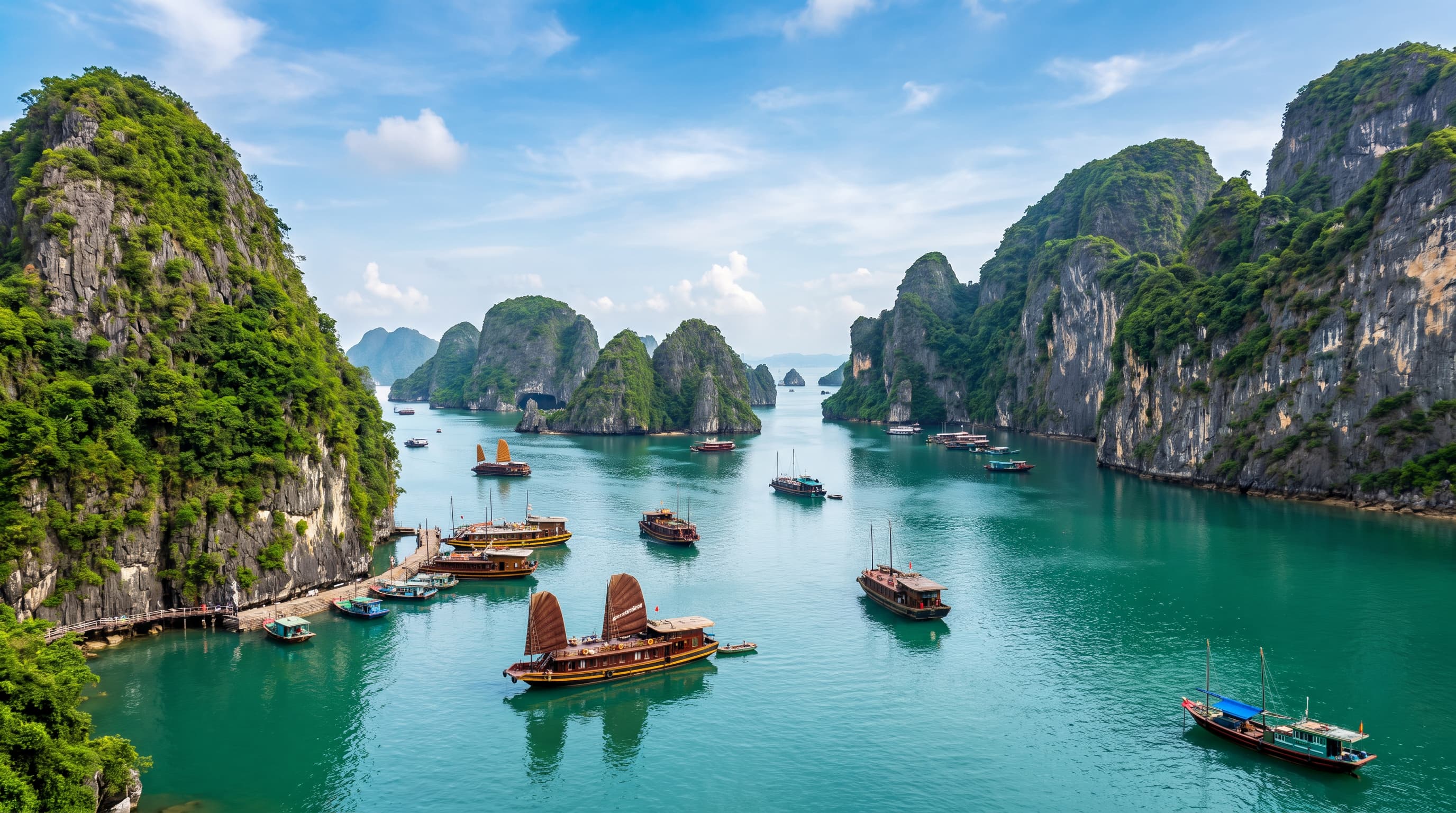
Many of Vietnam's highlights are cheap or free — wandering Hanoi's Old Quarter, Hoi An's lantern-lit streets, city temples and markets. Entry fees to sites and museums run $1–6. The splurges are the tours: a Ha Long Bay cruise ($60–150), a Mekong Delta day trip ($20–45), or a Phong Nha cave tour.
Budget $5–20 a day for activities and you'll see the highlights. Guided tours average $20–100 depending on group size and what's included, so the Ha Long Bay cruise is usually the single biggest activity cost of a Vietnam trip.
Sample Budgets: One Week and Two Weeks in Vietnam
Putting it together with the same method you'd use to budget any trip: a backpacker doing one week — dorms and homestays, street food, sleeper buses, a couple of tours — spends around $250–400 on the ground, plus flights. Two weeks runs roughly $500–800 at the same pace.
Here's a planning detail worth thinking through. You'll book flights and maybe a Ha Long Bay cruise ahead of time. Do those pre-paid costs count against the month you booked them, or against the trip? It matters — a flight paid in advance can wreck one month's budget while the trip itself looks deceptively cheap.
The app you track with can handle this. SpendSnap lets you choose when an expense counts, so a pre-booked flight or cruise can realize on the date you actually take it rather than the day you paid — landing it on the trip where it belongs. You can also run a dedicated Vietnam budget alongside your normal everyday budget at once, keeping your trip spending and your regular life as two clear numbers instead of one blur.
Vietnam Runs on Cash — Money Tips
Vietnam is a cash country for travelers, with a twist: the dong makes everyone a "millionaire." Pull cash from an ATM and you're handed hundreds of thousands or millions of dong, which is genuinely disorienting for the first few days. Street food, bia hơi, motorbike rentals, markets, and small homestays are all cash. Cards work at bigger hotels, malls, and tourist restaurants, but the bulk of daily spending is physical notes — and Vietnamese ATMs charge a per-withdrawal fee, so larger, less frequent withdrawals save money.
That's a problem for the usual budgeting apps. Anything that syncs to your bank sees a ₫3,000,000 ATM withdrawal, then goes blind — it can't tell whether that became a week of phở, beers, and bus fares or is still in your wallet. And the big, unfamiliar dong figures make it easy to lose track by hand. Cash spending is exactly what those apps can't follow, which is the whole reason a manual tracker exists.
There's a currency layer too. Even on a Vietnam trip, some costs stay in your home currency — the flight, travel insurance, an eSIM, subscriptions billing back home. SpendSnap logs each expense in the currency you actually paid, dong cash or a dollar card charge, and rolls everything into one honest home-currency total using rates it refreshes daily. You track spending in any currency without linking a bank, which is what makes those million-dong days readable. It's built for travelers who spend more than just cards.
Free to try • iPhone only • No account required
How to Keep Your Vietnam Trip on Budget
A daily budget only holds if you record what you spend, and that breaks on the small, constant buys — the ₫25,000 coffee, the ₫15,000 water, the ₫20,000 beer, several times a day, all in unfamiliar numbers. Nobody hand-types all of that for two weeks.
So don't. SpendSnap's quick-add re-logs an identical recurring expense with one tap, so your daily iced coffee or the same Grab fare goes in instantly. Log the moment you pay and the running total stays real. Because the app works offline, you can log a purchase on a sleeper bus or in Phong Nha with no signal, and it syncs once you're back online.
Track for a few days and you'll see your real pace against your budget — early enough to ease off before a big Ha Long Bay cruise, not after.
Frequently asked questions
Free to try • iPhone only • No account required