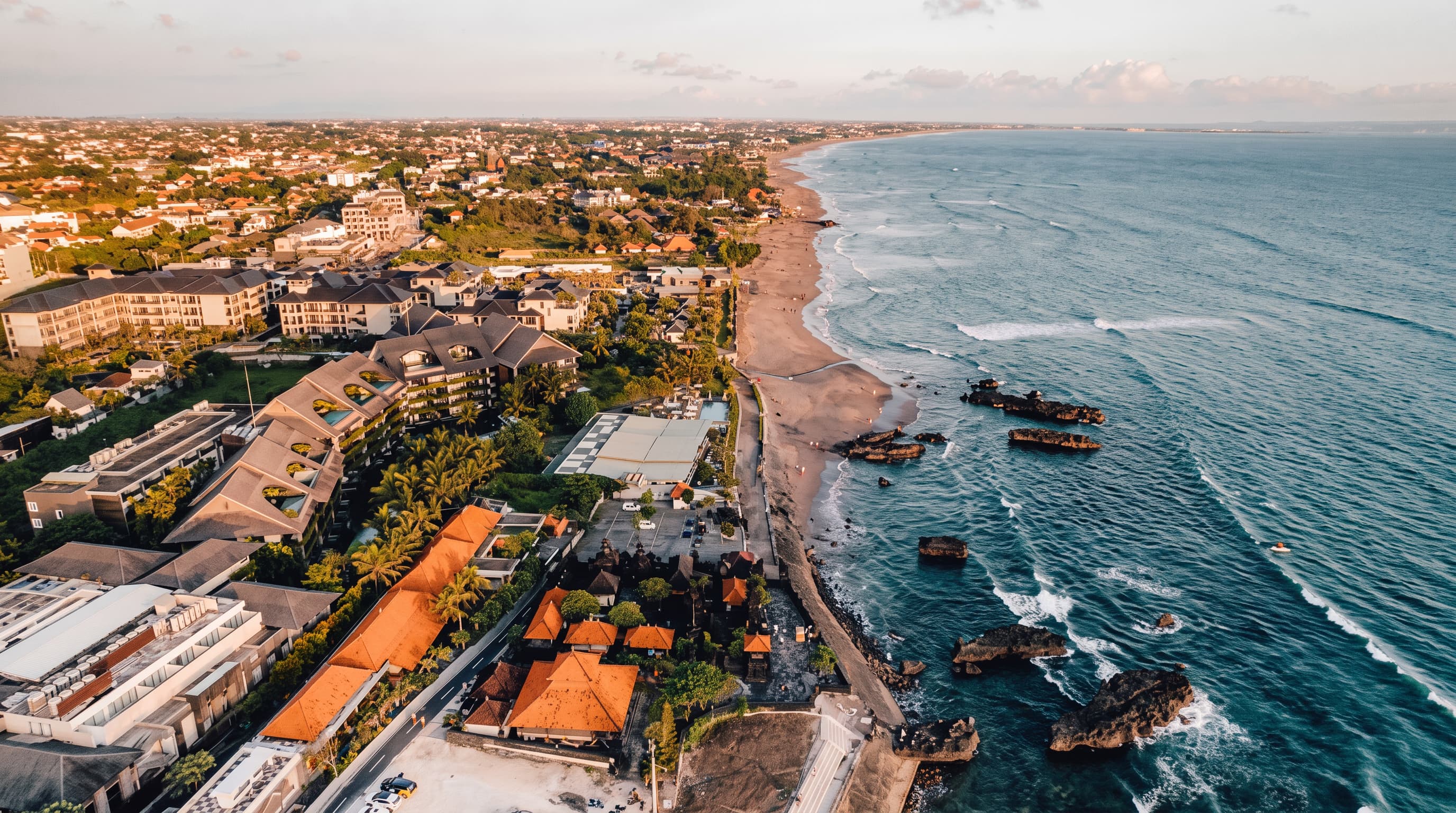
Cost of Living in Bali: What a Month Costs in 2026
Living in Bali costs most remote workers $900 to $2,500 a month in 2026, depending on the area and how you live. This guide breaks down the cost of living in Bali by lifestyle and by area (Canggu, Ubud, Sanur, and Uluwatu), covering rent, food, scooters, coworking, and the cash habits that make budgets slip.
Last updated
Free to try • iPhone only • No account required
TL;DR: Grey's 2026 guide (updated October 2026) puts a monthly budget at $885–1,370 for lean living, $1,495–2,290 mid-range, and $2,320–3,900 comfortable. By area, Sanur and Uluwatu run $900–1,400, Ubud $1,200–1,800, and Canggu and Seminyak $1,800–2,500. Rent is the biggest line. Warungs, drivers, and markets take cash only, so plan to carry and track rupiah.
Cost of Living in Bali at a Glance
Here is the full monthly budget by lifestyle for one person, in US dollars.
| Expense | Lean | Mid-range | Comfortable |
|---|---|---|---|
| Rent | $350–500 | $600–900 | $900–1,500 |
| Food and eating out | $120–200 | $250–400 | $400–600 |
| Scooter rental and fuel | $75–100 | $75–100 | $100–150 |
| Coworking membership | $80–120 | $120–200 | $150–250 |
| Utilities (electric, water, wifi) | $50–80 | $80–130 | $130–200 |
| Gym, yoga, fitness | $30–60 | $60–120 | $120–200 |
| Entertainment and socializing | $50–100 | $100–200 | $200–400 |
| Travel and day trips | $30–50 | $50–100 | $100–200 |
| Health insurance | $50–80 | $80–120 | $120–200 |
| Miscellaneous | $50–80 | $80–120 | $100–200 |
| Total | $885–1,370 | $1,495–2,290 | $2,320–3,900 |
Grey's own summary says $900–2,500 covers most people. The comfortable column runs higher because it adds villa-level rent, daily café meals, and a full social calendar. Pick the column that matches how you actually live, not the one you hope to.
Rent by Area
Where you live in Bali changes the total more than anything you do after you arrive. These are monthly prices per Grey.
| Area | Basic room or apartment | Private villa |
|---|---|---|
| Canggu | $600–900 | $900–1,800 |
| Seminyak | $700–1,000 | $1,000–2,000 |
| Ubud | $350–600 | $550–1,100 |
| Uluwatu | $300–500 | $450–900 |
| Sanur | $300–500 | $450–850 |
Co-living spaces run $700–1,200 a month. Check current listings before you commit to a lease, since asking prices vary by landlord and season.
Food and Getting Around
Food splits into two habits. A meal at a local warung costs $1.50–3, so two a day adds up to about $80–180 a month. A Western-style café meal costs $5–15, and eating at cafés daily costs $300–500 a month. Groceries (mixed local and imported) run $100–200.
Getting around is mostly a scooter. Monthly rental runs $60–100, plus $15–25 for fuel. Grab and Gojek rides cost $2–8 each, and a driver for a full day runs $30–50. If you don't ride a scooter, add more to the transport line.
Visas and Long-Stay Costs
Grey lists three common routes. A tourist visa on arrival allows 30 days and can be extended to 60. A social visa allows up to 180 days. A remote worker visa (E33G) allows 12 months. Fees and eligibility change, so confirm both on Indonesia's official immigration site before you book.
Costs that sit outside the monthly number are the ones that hurt: flights, a deposit on a villa, and an annual insurance premium. Divide each annual cost by 12 and add it to your monthly budget. A $900 insurance policy becomes $75 a month, and no single month looks wrong.
Cash, ATMs, and Hidden Fees
Bali is a cash economy outside hotels and malls. Warungs, drivers, traditional markets, and temple entries take rupiah only. Cards work at hotels, larger restaurants, and supermarkets.
ATMs carry fees you should know about:
- Per-withdrawal caps are low. Guides report about Rp2,000,000–3,000,000 per transaction, and few machines go higher. That is roughly $125–190 at recent rates.
- Bank Mandiri added a fee for foreign cards. Since February 22, 2026, Mandiri charges Rp50,000 per transaction on Visa and Mastercard cards, on top of your own bank's fees, per Mandiri's notice. The fee shows on screen before you confirm.
- Decline currency conversion. If the machine offers to charge you in your home currency, choose rupiah. The machine's rate is often worse than your bank's.
Because the fee applies per transaction, fewer and larger withdrawals cost less. Our foreign transaction fees guide covers the rest.
This is where bank-synced budgeting apps fall short. They see an ATM withdrawal, then lose the trail. Rp2,000,000 could be a week of warung meals or sit in your drawer. Cash is the spending those apps can't follow.
How to Track a Monthly Budget in Bali
A Bali budget leaks through small, frequent cash purchases: the Rp25,000 coffee, the Rp15,000 parking, the Rp60,000 warung dinner. Nobody types them all into a spreadsheet.
SpendSnap is built for this. You log each expense in the currency you paid, rupiah cash or a dollar charge for your coworking membership, and it converts everything to one home-currency total using rates it refreshes once a day. Quick-add re-logs a repeat purchase in one tap. Set a monthly target and SpendSnap tracks your pace against it, so you can ease off mid-month instead of finding out at the end.
Two features suit a longer stay. You can run a Bali budget and an everyday budget at the same time, so your US subscriptions don't blur into local spending. And you can choose which date an expense counts, so a flight booked months ago lands on the month you actually fly. SpendSnap works offline, needs no bank connection, and exports to a spreadsheet. It's built for digital nomads and for tracking any currency.
Planning a shorter visit? The Bali travel budget guide covers per-day trip costs.
Free to try • iPhone only • No account required
Frequently asked questions
Free to try • iPhone only • No account required